
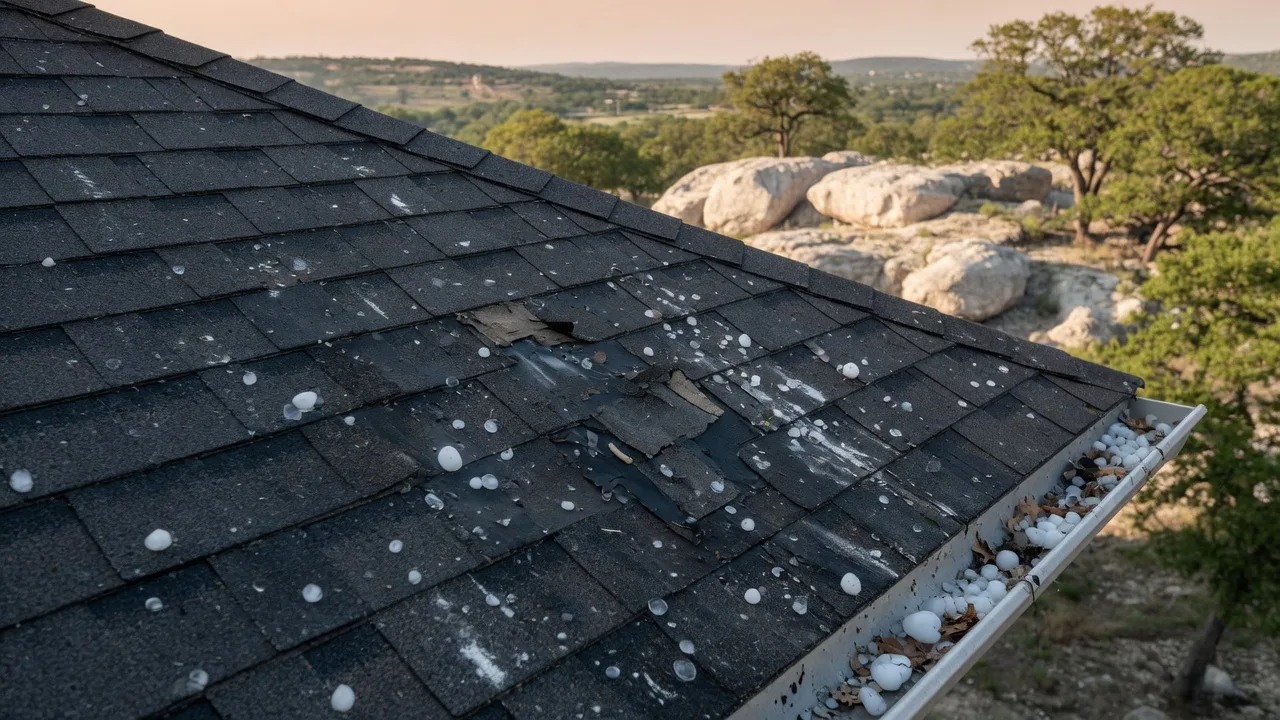
Property insurance is one of the largest recurring costs of homeownership in the Texas Hill Country, and it is the one most buyers underestimate. Texas homeowner insurance premiums average approximately $4,085 to $4,585 per year for a policy with $300,000 in dwelling coverage , roughly 60 percent above the national average of $2,110 to $2,543 [1][2]. In the Hill Country, the exposure profile is even more specific: hail corridors running through Kendall and Bexar counties, flash flood risk in limestone terrain, and wildfire exposure on rural acreage with native vegetation. A standard homeowner policy does not cover all of these risks, and the deductible structure in Texas is different from what most buyers from other states expect. Here is how the insurance landscape actually works for Hill Country properties.
Why Texas premiums are structurally higher
Texas ranks among the most expensive states for homeowner insurance, and theÃ¥ÂÂå is not a single factor , it is the combination of several structural conditions [1]. Texas experiences more insured losses from severe weather than any other state. The state averages approximately 124 hail events per year, with a corridor running directly through the Hill Country from San Antonio through Boerne and Fredericksburg [3]. Hail and wind damage account for roughly 40 percent of all homeowner insurance claims filed in Texas, and the average residential hail damage claim runs approximately $12,000 [3][4].
Beyond weather frequency, Texas has one of the highest rates of insurance litigation in the country. The Texas Department of Insurance has documented that Texas accounts for a disproportionate share of the nation's insurance lawsuits , a cost that gets priced into every policyholder's premium [5]. The combination of high claim frequency, high claim severity, and elevated litigation costs creates a structural premium floor that is higher than most other states, regardless of the specific property.
For the Hill Country specifically, the risk profile includes additional factors: rural properties may be served by volunteer fire departments rather than municipal fire services, which affects the ISO fire rating used by insurers; properties on acreage may lack nearby fire hydrants; and limestone terrain concentrates stormwater runoff in ways that increase flash flood exposure [6].
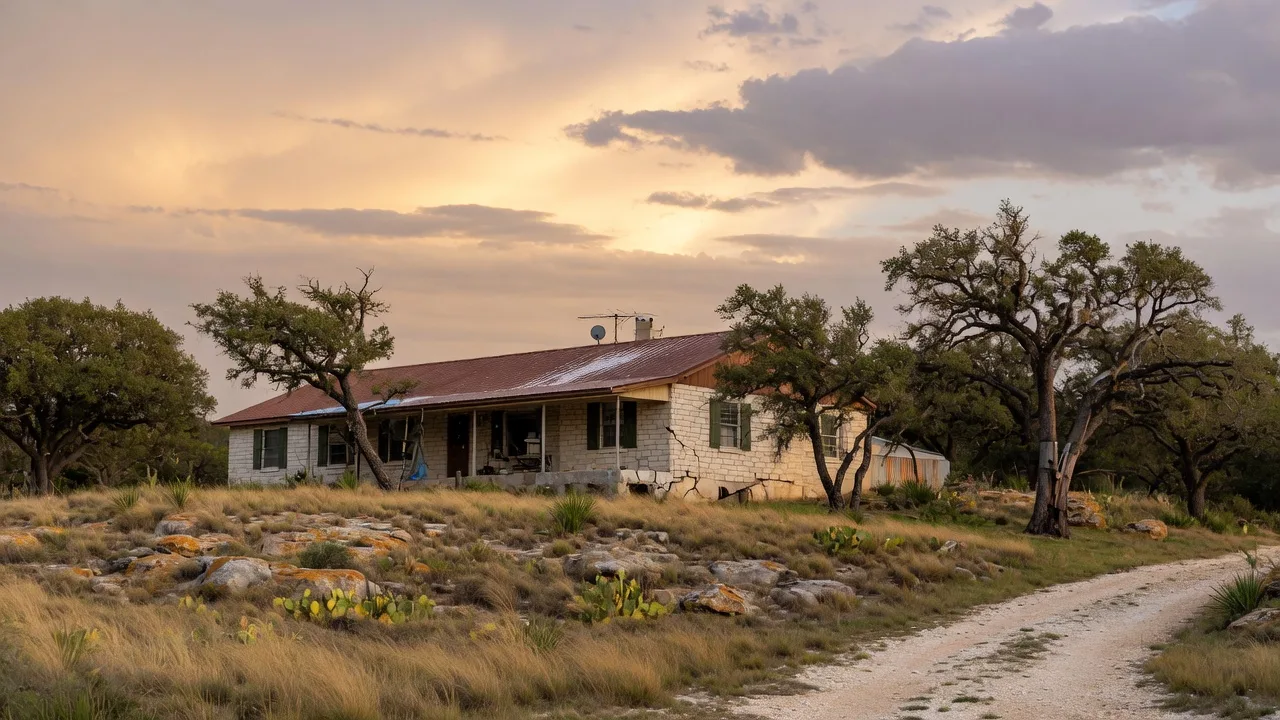
How Texas homeowner policies are actually structured
A standard Texas homeowner policy (HO-3 form) covers the structure of the home, personal property, liability, and additional living expenses. But the way Texas policies handle deductibles , particularly for wind and hail , is structurally different from most other states [7].
In most states, a homeowner policy carries a single deductible , typically $1,000 to $2,500 , that applies to all covered perils. In Texas, most policies carry two separate deductibles: a standard All Other Perils (AOP) deductible that applies to everything except wind and hail, and a separate Wind and Hail deductible that is typically calculated as a percentage of the dwelling coverage [7][8].
Texas Deductible Structure: How Two Deductibles Work
| Deductible Type | Typical Amount | Applies To |
|---|---|---|
| All Other Perils (AOP) | $1,000 â $2,500 flat | Fire, theft, plumbing, liability , everything except wind/hail |
| Wind & Hail | 1% â 3% of dwelling coverage | Wind damage, hail damage, tornado, hurricane |
Sources: Texas Department of Insurance; Killebrew Insurance , 2026 Wind & Hail Deductible Guide; Insurance for Texans. Actual deductible amounts vary by carrier and policy.
The practical impact of the percentage-based wind/hail deductible is significant. On a $450,000 home with 1 percent wind/hail deductible, the homeowner pays the first $4,500 of any wind or hail claim out of pocket before insurance coverage begins [8]. At 2 percent, that figure rises to $9,000. At 3 percent , which some carriers require in high-risk Hill Country ZIP codes , the out-of-pocket threshold reaches $13,500 [7][8].
For context: the average hail damage claim in Texas is approximately $12,000 [4]. If a homeowner with a 2 percent deductible on a $450,000 home files a hail claim for $12,000, the insurance payout is $3,000 , the difference between the claim amount and the $9,000 deductible. The homeowner absorbs $9,000 of the $12,000 loss. This is not a theoretical scenario , it is the arithmetic that plays out in thousands of Hill Country claims every year.
Hill Country-specific risk factors
The Hill Country sits in one of the most active severe weather corridors in the United States. The geographic and geological characteristics that make the region distinctive , rolling terrain, limestone bedrock, native vegetation, and proximity to the Gulf moisture corridor , also create specific insurance risk exposures [3][6].
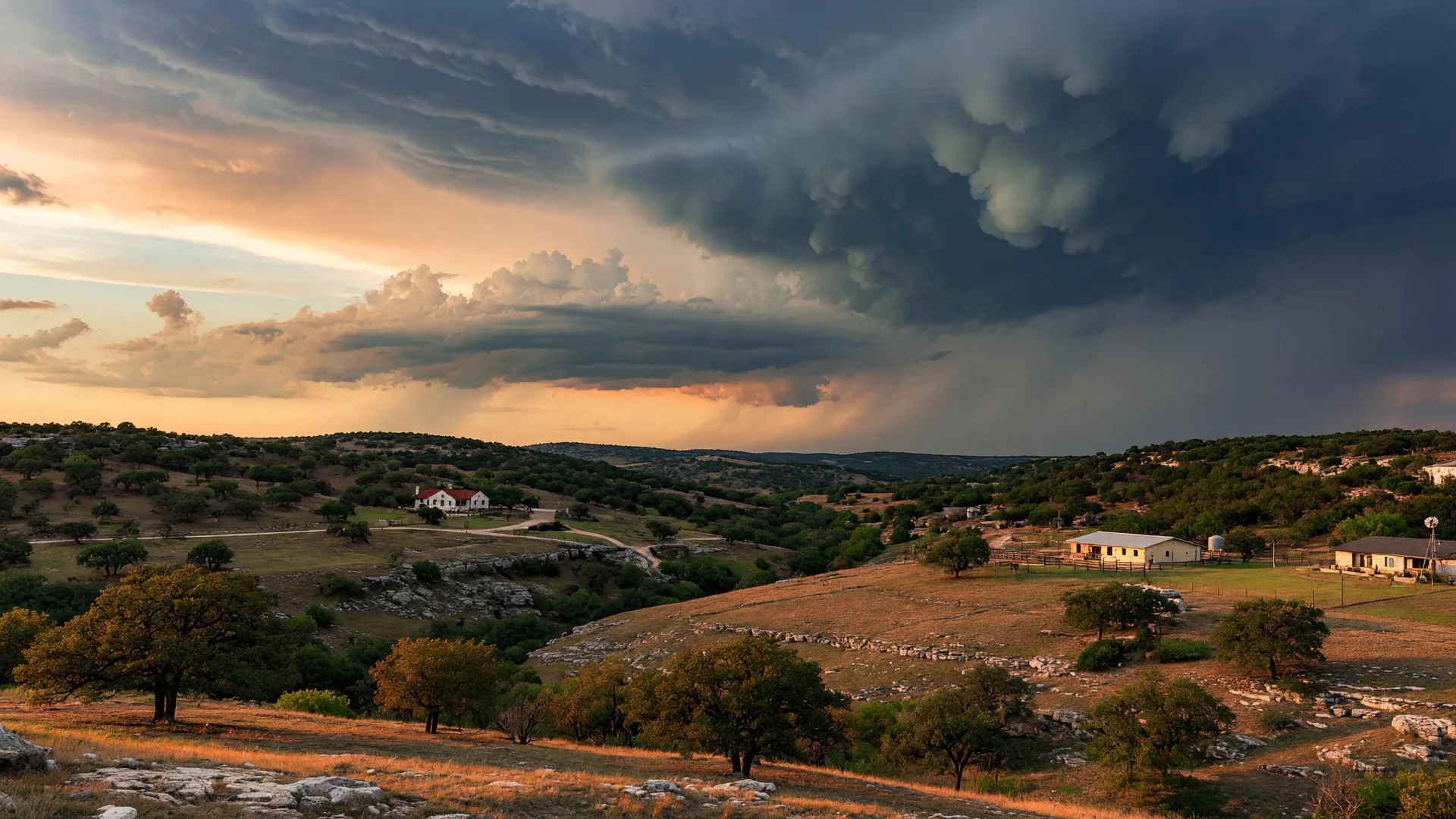
Hail. The National Weather Service has identified a persistent hail corridor running from San Antonio through the Hill Country, with peak activity from April through June [3]. Kendall County, Comal County, and northern Bexar County all fall within this corridor. Hailstones in the Hill Country regularly reach 1 to 2 inches in diameter, which is sufficient to damage asphalt shingles, dent metal roofing, crack skylights, and destroy vehicle paint. Texas records approximately 124 significant hail events per year , more than any other state [3].
Flash flooding. The Edwards Aquifer's karst limestone terrain creates concentrated drainage patterns. When intense rainfall hits the Hill Country's thin soils and exposed limestone, water moves rapidly through creek systems, underpasses, and low-water crossings [6]. The July 2002 flood in Comfort, the 2015 Memorial Day flooding in Wimberley, and recurring flooding along the Guadalupe and Blanco rivers demonstrate the flash flood risk. Standard homeowner policies do not cover flood damage , this requires a separate policy through the National Flood Insurance Program (NFIP) or a private flood insurer [9].
Wildfire. Properties on rural acreage with native Ashe juniper (cedar), live oak, and native grass carry elevated wildfire exposure. The Texas A&M Forest Service tracks wildfire risk across the state, and the Hill Country regularly ranks among the highest-risk areas during drought conditions [10]. Homeowner policies generally do include fire coverage, but premiums reflect the proximity to wildland-urban interface areas and the local fire protection class.
Hill Country Insurance Risk Factors
| Risk Factor | Coverage in Standard Policy? | Separate Policy Needed? |
|---|---|---|
| Hail damage | Yes (subject to wind/hail deductible) | No |
| Wind damage | Yes (subject to wind/hail deductible) | No |
| Flash flooding | No | Yes , NFIP or private flood insurance |
| Wildfire | Yes (subject to standard deductible) | No |
| Earthquake | No | Yes , separate earthquake policy (rarely needed in Hill Country) |
| Well/septic failure | No | No standard product available |
Source: Texas Department of Insurance; NFIP; standard HO-3 policy forms. Coverage specifics vary by carrier and policy endorsements.
Flood insurance: the gap most Hill Country buyers miss
Flash flooding is the Hill Country's most destructive weather peril on a per-event basis, and it is the one most frequently uninsured. Standard homeowner policies explicitly exclude flood damage , defined as water that originates from outside the structure [9]. This means water that enters a home through a foundation crack during a flash flood, a creek that overflows into a home, or stormwater that overwhelms a drainage system is not covered under a standard HO-3 policy.
The National Flood Insurance Program (NFIP), managed by FEMA, provides coverage up to $250,000 for the structure and $100,000 for contents on residential properties [9]. The average annual NFIP premium in Texas is approximately $779, though actual rates depend on the property's flood zone designation, elevation, and the flood map in effect [9]. Private flood insurance is also available from several carriers and may offer higher coverage limits or lower premiums than the NFIP, depending on the property.
The critical issue for Hill Country buyers is that many properties outside FEMA-designated high-risk flood zones still flood. The Hill Country's limestone terrain, steep grades, and concentrated drainage patterns create flash flood conditions that do not always align with FEMA's flood insurance rate maps [6][9]. FEMA maps are updated infrequently and may not reflect recent development, changes in drainage patterns, or the concentrated rainfall events that are increasing in frequency. ABC News analysis of FEMA flood data confirmed that a significant percentage of properties affected by Texas floods were located outside FEMA-designated high-risk zones [6].
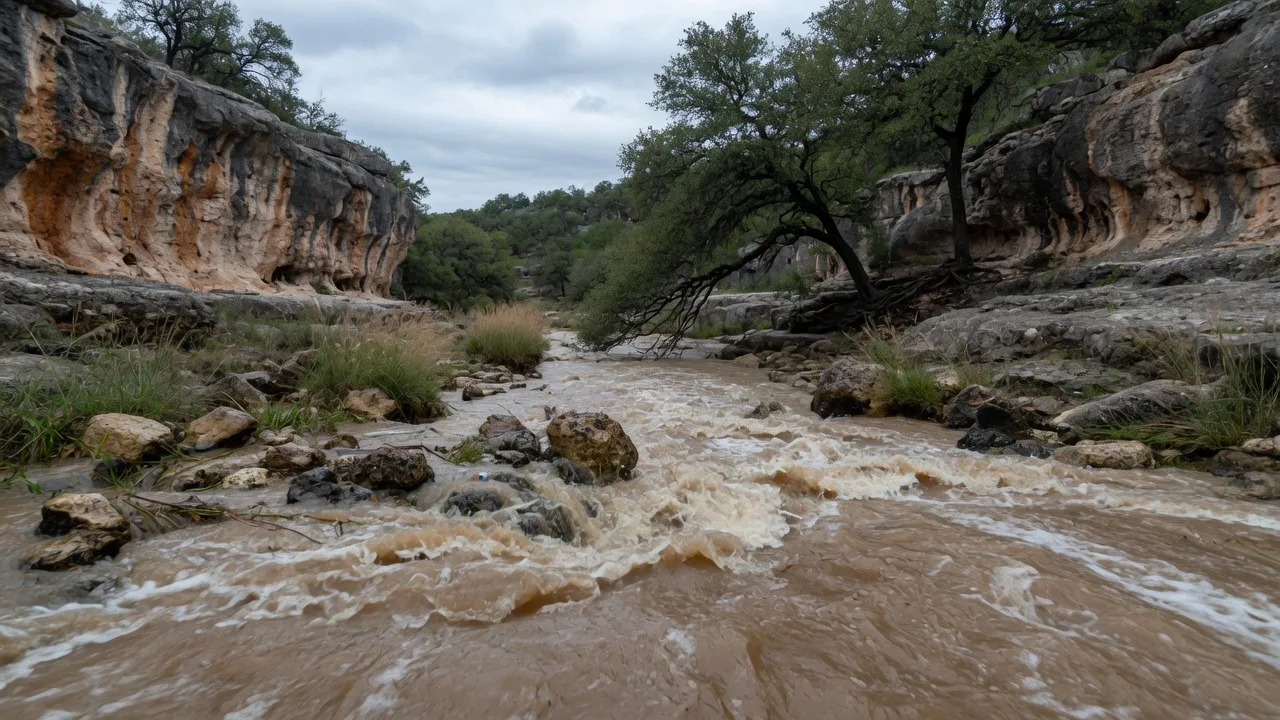
For buyers considering properties near creeks, rivers, or in low-lying areas, flood insurance is worth evaluating regardless of the FEMA zone designation. The cost of an NFIP policy , $400 to $1,200 per year for most properties outside high-risk zones , is a fraction of the uninsured cost of a single flood event.
The Texas FAIR Plan: last-resort coverage
When standard market insurers decline to write a policy , typically because the property has a history of claims, a deteriorated roof, or is in a high-risk area , the Texas FAIR Plan Association (TFPA) provides a last-resort option [11]. Established by state legislation in 1995, the TFPA is not a government agency; it is an association of licensed property insurers that provides basic coverage to property owners who cannot obtain insurance through the voluntary market.
Eligibility requirements are strict: applicants must provide proof of denial from at least two insurance companies licensed in Texas, cannot have a current homeowners policy or valid renewal offer, and the property must meet TFPA underwriting standards [11]. The TFPA provides basic dwelling coverage at actual cash value (not replacement cost) and is generally more expensive and less comprehensive than standard market policies.
TFPA policies are issued on one-year terms, and policyholders must attempt to obtain coverage in the open market every two years [11]. The TFPA is designed as a temporary bridge, not a permanent solution , and the coverage limitations mean that policyholders carry more risk out of pocket than they would with a standard market policy.
Strategies to reduce premiums
While Texas premiums are structurally higher than the national average, several strategies can produce meaningful premium reductions. These are not theoretical , they are specific, actionable steps that directly affect the annual cost of coverage.
Impact-resistant roofing. Texas law requires insurers to offer premium discounts for homes with qualifying hail-resistant roofing materials [12]. Class 4 impact-resistant shingles , the highest UL rating , can reduce wind and hail premiums by 5 to 15 percent depending on the carrier and location [12][13]. On a $4,000 annual premium, a 10 percent discount saves $400 per year. Over a 20-year roof life, that is $8,000 in cumulative savings , a meaningful offset against the higher upfront cost of Class 4 shingles, which typically run $1 to $2 more per square foot than standard architectural shingles.
Metal roofing and tile roofing also qualify for impact-resistance discounts, and some carriers offer additional discounts for FORTIFIED Home construction standards , a voluntary building standard developed by the Insurance Institute for Business & Home Safety (IBHS) that provides enhanced protection against wind and hail [13].
Premium Reduction Strategies
| Strategy | Typical Discount | Notes |
|---|---|---|
| Class 4 impact-resistant shingles | 5âÂÂ15% | Required by law; varies by carrier |
| Higher wind/hail deductible | $500âÂÂ$1,500/year | Shifting from 1% to 2% deductible can reduce premium substantially |
| Home + auto bundling | 5âÂÂ10% | Most carriers offer multi-policy discounts |
| New roof (under 10 years) | 10âÂÂ25% | New roof reduces claim probability; significant premium impact |
| Security system / smart home | 2âÂÂ5% | Monitored alarm, water leak detection, smart thermostats |
| Claims-free discount | 10âÂÂ20% | 3âÂÂ5 years without a claim; most significant available discount |
Sources: Texas Department of Insurance; Contractors Liability; Richey Insurance; Killebrew Insurance. Actual discounts vary by carrier and property.
Deductible selection. Choosing a higher wind/hail deductible is the single most direct lever for reducing the annual premium. Moving from a 1 percent to a 2 percent deductible on a $450,000 home shifts an additional $4,500 of out-of-pocket risk to the homeowner , but can reduce the annual premium by $500 to $1,500 depending on the carrier [7][8]. The tradeoff is straightforward: lower annual cost in exchange for higher self-insured risk on the most common claim type in the Hill Country. Homeowners with strong emergency savings may find this tradeoff favorable; those without the financial cushion to absorb a $9,000 deductible should keep the lower percentage.
New roof. Roof age is one of the most significant factors in Texas homeowner insurance pricing. Most carriers apply a substantial premium reduction for roofs under 10 years old and may increase premiums or decline coverage for roofs over 15 to 20 years old [13]. A new roof , particularly one installed with Class 4 impact-resistant shingles , addresses both the age-related premium increase and the impact-resistance discount, producing a combined effect that can reduce the annual premium by 15 to 25 percent on older homes.
Shopping and bundling. Texas homeowner insurance is a competitive market, and premiums vary significantly between carriers for identical coverage. Obtaining quotes from three to five carriers , or working with an independent agent who can compare across multiple carriers , is the most reliable way to confirm that the current premium is competitive. Bundling homeowner and auto insurance with the same carrier typically produces an additional 5 to 10 percent discount on both policies [1].
What buyers should know before closing
Insurance costs should be factored into the purchase budget before making an offer , not discovered during the closing process. Several Hill Country-specific factors affect insurability and premium levels:
Roof age and condition. Before committing to a property, obtain information about the roof's age, material, and condition. A 20-year-old asphalt shingle roof may trigger premium surcharges or coverage limitations with some carriers. A newer roof with impact-resistant materials may qualify for meaningful discounts. The cost difference between insuring the same home with a new versus a 20-year-old roof can be $800 to $2,000 per year.
Fire protection class. The ISO (Insurance Services Office) fire protection class , rated on a scale of 1 to 10, with 1 being the best , measures the quality of fire protection available to the property [10]. Properties within the city limits of Boerne or San Antonio typically have a class of 2 to 4, reflecting professional fire departments with nearby hydrants. Rural properties in Kendall or Comal County may have a class of 7 to 10, reflecting volunteer fire departments and limited water supply for firefighting. The ISO class directly affects the fire portion of the homeowner premium , a higher class number produces a higher premium.
Flood zone determination. Request a flood zone determination for any property before closing. The FEMA Flood Map Service Center provides free access to current flood insurance rate maps [9]. Properties in Zone X (minimal flood hazard) are outside the high-risk area, but as noted above, Hill Country properties outside high-risk zones still carry meaningful flash flood exposure. Properties in Zone A or AE are in high-risk areas and will require flood insurance if the buyer has a federally backed mortgage.
Distance to fire hydrant and fire station. The distance from the property to the nearest fire hydrant and fire station affects the ISO rating and the premium. Properties more than 5 road miles from a fire station, or more than 1,000 feet from a fire hydrant, typically receive a less favorable ISO classification [10]. This is a structural factor that cannot be changed , it is a fixed cost of the property's location.
Selling a Hill Country home: insurance disclosure
Sellers and listing agents should be prepared to address insurance-related questions from prospective buyers. The Texas Seller's Disclosure Notice (TREC Form OP-H) requires sellers to disclose known conditions that affect the property, including any history of flood damage, wind damage, or insurance claims [14]. Providing documentation of recent insurance claims , and the repairs completed , gives buyers the information they need to accurately price insurance into their purchase budget.
Sellers of properties with newer roofs, impact-resistant roofing materials, or claims-free insurance histories should highlight these features in the listing. In a market where insurance costs are a material component of monthly housing expense, a new roof or a clean claims history can be a competitive differentiator.
Questions about property-specific insurance costs?
Understanding how insurance costs interact with property value, location, roof condition, and risk exposure is part of evaluating any Hill Country property. A direct conversation about the specific property and its insurance profile provides the context needed to make an informed decision.
Contact Bill RossFrequently asked questions
How much does homeowner insurance cost in the Texas Hill Country?
Texas homeowner insurance premiums average approximately $4,085 to $4,585 per year for a policy with $300,000 in dwelling coverage , roughly 60 percent above the national average [1][2]. Actual premiums vary based on the property's location, construction type, roof age, claims history, and the selected coverage limits and deductibles. Hill Country properties may carry additional premium adjustments based on their ISO fire protection class, distance to fire protection, and exposure to hail and flash flood risk.
What is the wind/hail deductible and why is it separate?
Most Texas homeowner policies carry a separate deductible for wind and hail damage, calculated as a percentage of the dwelling coverage , typically 1 to 3 percent [7][8]. This separate deductible exists because wind and hail are the most frequent and most costly claims in Texas. On a $450,000 home with a 2 percent wind/hail deductible, the homeowner pays the first $9,000 of any wind or hail claim out of pocket. The AOP deductible , typically $1,000 to $2,500 , applies to all other covered losses.
Does standard homeowner insurance cover flash flood damage?
No. Standard homeowner policies (HO-3 forms) explicitly exclude flood damage , defined as water that originates from outside the structure [9]. Flash flood damage, including water that enters a home through foundation cracks, overwhelmed drainage systems, or overflowing creeks, requires a separate flood insurance policy through the National Flood Insurance Program (NFIP) or a private flood insurer. NFIP policies are available to any property owner regardless of flood zone designation.
Will my insurance rates go up after a claim?
Yes, in most cases. Filing a claim , particularly a wind/hail claim , typically results in a premium increase at the next policy renewal. The increase varies by carrier and claim amount, but industry data suggests that a single claim can increase premiums by 10 to 25 percent for three to five years [5]. For this reason, the decision to file a claim should weigh the claim amount against the projected premium increase and the impact of losing any claims-free discount. Claims under approximately $5,000 may be more cost-effective to pay out of pocket, depending on the homeowner's specific premium structure.
How does the ISO fire protection class affect my premium?
The ISO fire protection class , rated 1 through 10 , measures the quality of fire protection available to the property based on fire department capability, water supply, and proximity [10]. A lower class number indicates better fire protection and produces lower homeowner premiums on the fire coverage component. Properties in Boerne or San Antonio city limits typically have a class of 2 to 4; rural Hill Country properties may have a class of 7 to 10, resulting in higher premiums for fire-related coverage.
Should I get flood insurance even if I am not in a high-risk flood zone?
The Hill Country's limestone terrain and concentrated drainage patterns create flash flood conditions that do not always align with FEMA's flood insurance rate maps [6][9]. NFIP policies for properties in low-risk Zone X typically cost $400 to $600 per year , significantly less than the $8,000 to $50,000+ cost of uninsured flood damage. For properties near creeks, rivers, or in low-lying areas, flood insurance provides meaningful protection at a relatively low cost.
__UNIQUE_SOURCES_MARKER__ class="space-y-3 text-[14px] leading-relaxed list-decimal list-inside">
Last verified: July 6, 2026
Published July 6, 2026
Updated July 6, 2026